en
en
 Français

Rhinestone: a sparkling crystal with timeless charm
Rhinestone is a cut crystal renowned for its bright sparkle and elegant appearance. Emerging in the 18th century and becoming especially popular in the 19th, it takes its name from the flourishing trade along the Rhine, where workshops specialized in cutting high-quality lead crystal, particularly in Bohemia. Used as an imitation of diamond, rhinestone stands out for its brilliant shine, transparency, and ability to catch the light—qualities that made it a favored material in antique jewelry, ballroom adornments, and luxury accessories.
Made from lead-rich crystal, rhinestone offers impressive brilliance while remaining accessible. It was widely used in 19th- and early 20th-century French jewelry, especially in solitaire rings, Art Nouveau brooches, and Belle Époque parures. Its soft luminosity and dramatic sparkle made it a popular alternative to precious stones, allowing jewelers to create opulent designs without the cost of diamonds.
Antique rhinestone: quality, styles, and craftsmanship
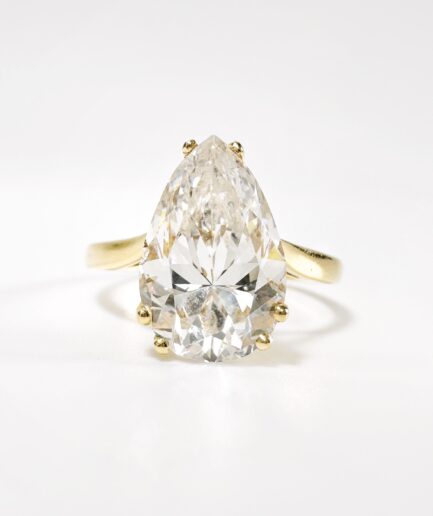
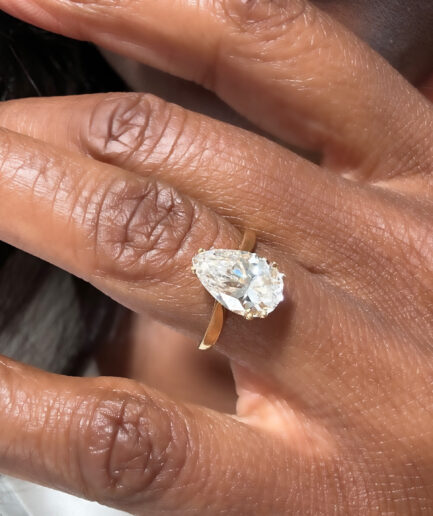
In vintage jewelry, antique rhinestone is characterized by its precise faceting, often in brilliant cut, rose cut, or pear shape. Each facet was carefully polished to create a dazzling diamond-like effect. Rhinestones were frequently set in silver, vermeil, or even 18k gold, especially in mid-20th-century French pieces. Thanks to its versatility, rhinestone appears in rings, tiaras, necklaces, hair ornaments, and sentimental jewelry.
Today, rhinestone remains highly appreciated for its retro charm, romantic aesthetic, and distinctive play of light. It embodies a unique artisan tradition and reflects a period when cut crystal competed with natural gemstones to illuminate both evening wear and everyday jewelry.